QRCL: QR-Based Estate Management Platform
Product, Brand & Design Engineer Mobile & Web: Resident, Sub-Resident, Security Scanning, Admin/Super Admin
Overview
QRCL set out to solve a problem most estate communities still handle manually visitor access, resident coordination, and estate administration, all running on logbooks, WhatsApp groups, and guesswork. There was no existing product to build from, no prior design system, and no team in place when I joined. I owned the full system architecture from a blank page, across four connected applications: Resident, Sub-Resident, Security Scanning, and Admin/Super Admin.
The Challenge
This wasn't a single-screen problemMy Process
1. Architecture before screens
Before designing a single interface, I mapped the full system architecture
how Resident, Sub-Resident, Security Scanning, and Admin/Super Admin would actually connect and share data. Then I built a complete design system and component library, so that as four separate applications were built, they'd still feel like one coherent product.
2. Designing for a physical, time-pressured moment
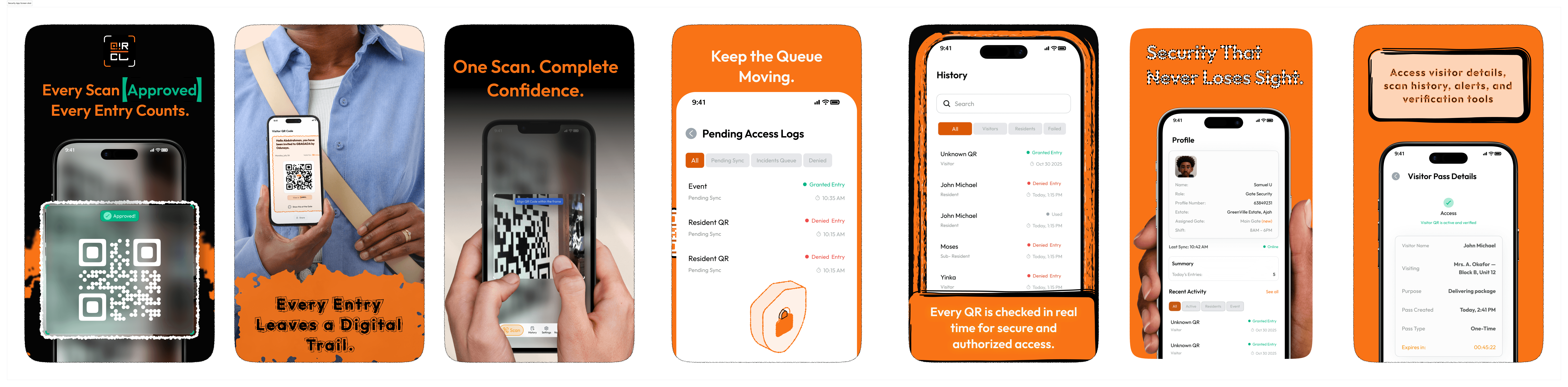
The Security Scanning app was the most constrained design problem in the whole system it's used by estate security personnel verifying visitor and vehicle QR passes in real time, often under pressure, at a gate, with someone waiting. I designed for immediate legibility: fast scan-to-confirm response, unmistakable pass/fail visual states readable at a glance, and a clear escalation path for flagged or invalid codes so a guard never has to interpret ambiguous feedback in the moment it matters most.
3. Closing the loop between resident, visitor, and security
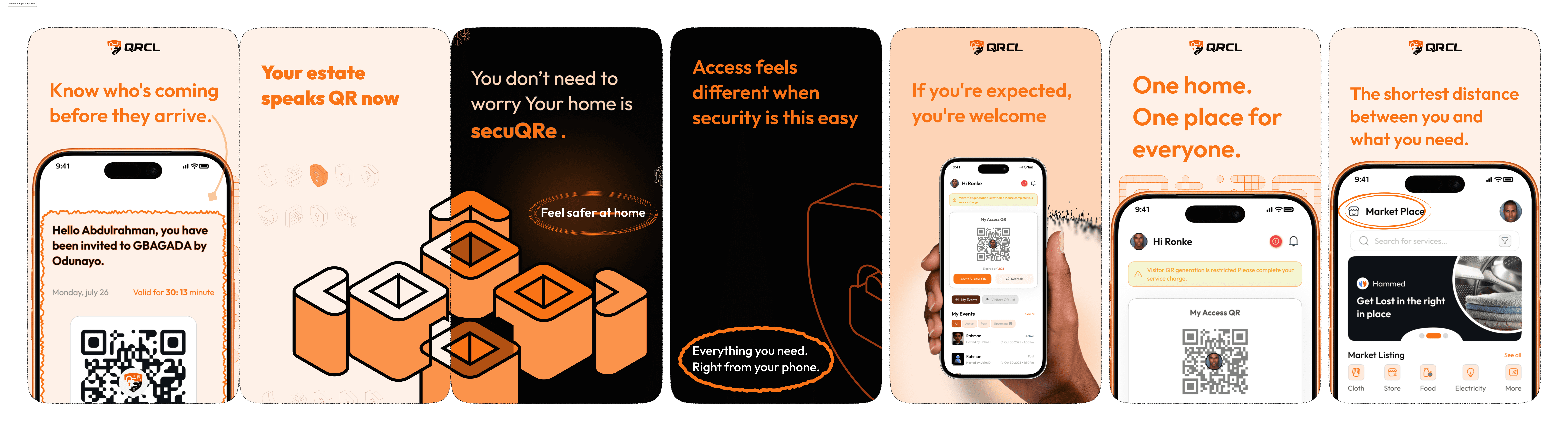
On the Resident side, I designed a visitor issuance flow letting residents generate time-bound QR passes for their guests. Those passes feed directly into what Security Scanning validates against and every scan logs automatically into Admin/Super Admin, replacing manual logbooks with a live, auditable record of every entry and exit.
4. Building for developers, not just for approval
I hosted design builds on a local server and published them to Vercel, giving developers a live, functioning reference to work from during API integration not just static Figma frames they'd have to interpret from scratch.
5. Going beyond the brief
Partway through, I identified a real gap: the original scope hadn't accounted for how residents and landlords actually needed to interact with each other. There was no PRD covering it. I independently scoped, designed, and shipped an entirely new sub-application to close that gap taking it from a noticed problem to a shipped feature with full ownership. it was a systems problem. Four applications, four different permission levels, four different real-world contexts of use: a resident generating a guest pass from their phone, a security guard scanning it at a gate under time pressure, an admin needing a full audit trail of who entered and when. Each had to work correctly on its own, and also connect seamlessly to the others in real time.
There was no PRD to lean on for most of it. I had to define what the product even was before I could design how it worked.
What I Designed
Resident App: visitor pass issuance, estate communication, and account management
Security Scanning App: real-time QR verification for visitors and vehicles, built for fast, unambiguous field use
Admin/Super Admin: live audit logging connected directly to every scan, plus full estate oversight
Sub-Resident App: extending access appropriately to secondary occupants
A new resident-landlord interaction sub-application, defined and shipped without an existing brief

qrcode.ng
More